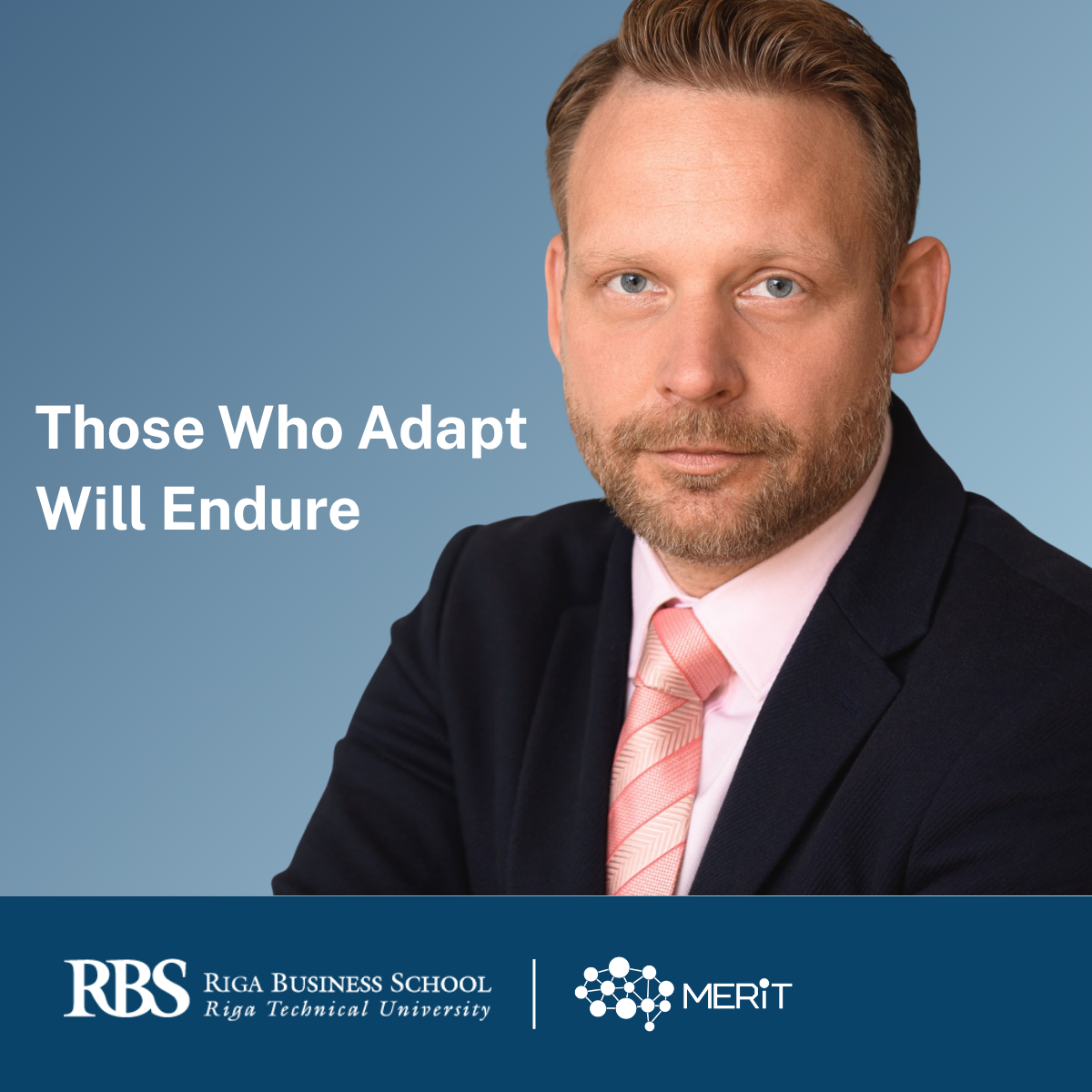
Kristaps Banga, with over 20 years of experience in business management, change management consulting, innovation, sales and marketing. He excels in driving business growth, transformation, and innovation strategy development. Since 2023, Kristaps leads Accenture global Space Innovation’s go-to-market activities in Europe, developing integrated strategies and enhancing business performance.
Kristaps has held key roles at Carlsberg Group, MTG, Peugeot, and TET, and founded several companies. He holds a Bachelor’s in Economics (Ventspils University College), a Master’s in Marketing (University of Latvia), and currently is a PhD student in Innovation Management (Riga Technical University). His education includes courses from London Business School, HarvardX, Dartmouth College, and HEC Paris.
An international speaker, lecturer, and workshop facilitator, Kristaps specializes in strategy, innovation, and business design. He is a guest lecturer at the Service Design Strategies and Innovations master’s program and has lectured at BA School of Business and Finance, Business Academy, Riga Business School, Art Academy of Latvia, University of Latvia, and BMI Executive Institute. He is also an active mentor and board advisor to several startups.
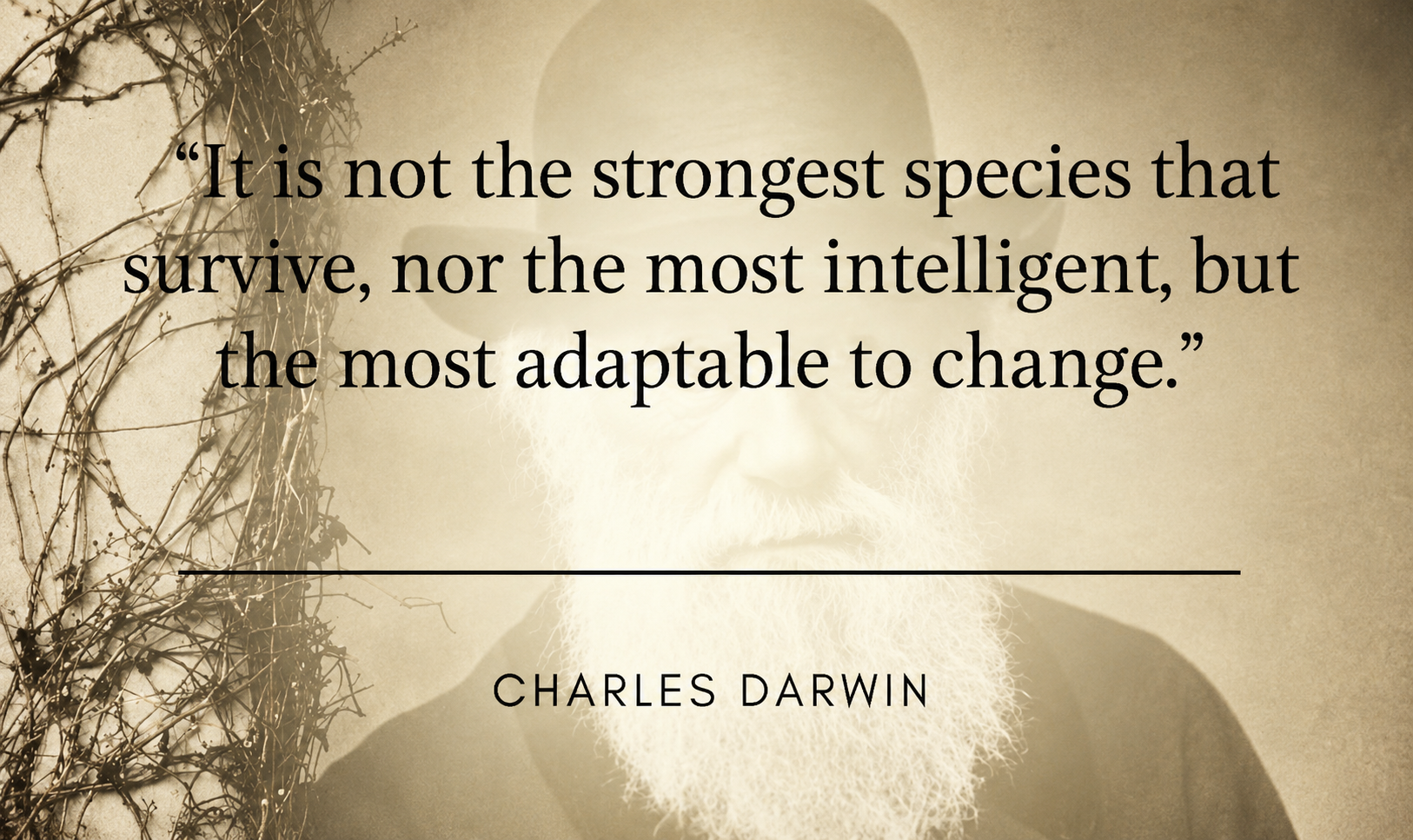
Those Who Adapt Will Endure
Kristaps Banga, Accenture Senior Manager, Innovation Strategy & Consulting
Business leaders like plans. We like roadmaps, budgets, milestones, steering committees, KPIs, and clear ownership. And we should. Without structure, organisations become slow, fragmented, and reactive.
But today the real challenge is different. In many industries, the world is changing faster than the management systems designed to control it. Technology changes. Regulation changes. Customer behavior changes. Supply chains change. Competitors appear from unexpected places. Geopolitical and economic shocks can shift priorities in a few weeks. In this environment, the strongest company is not always the one with the biggest balance sheet. The smartest company is not always the one with the best strategy deck. The company that lasts is the one that can adapt its governance, tactics, and innovation activities when reality changes.
This is why adaptive management is becoming one of the most practical leadership competencies for modern business.
The plan is important, but it cannot become sacred
Most companies do not fail because they have no plan. Very often, they fail because they continue to follow the old plan for too long.
At the beginning, the plan may be logical. The business case is approved. The team is assigned. The roadmap looks clear. The KPIs are agreed. But then the market moves. A customer segment reacts differently than expected. A new regulation changes the economics. A supplier becomes a bottleneck. A technology matures faster than planned. A competitor enters with a different model. Or the company discovers that the real challenge is not building the solution, but getting people to use it.
In these moments, traditional management often asks: are we on time, on budget, and within scope? Those questions still matter. But they are not enough. Leaders must also ask: what has changed, what have we learned, and what decision do we need to make now? This is the difference between static management and adaptive management. Static management protects the original plan. Adaptive management protects the business outcome.
Governance must become a learning system
Good management and governance is often seen as control. Approve investments. Review progress. Manage risks. Escalate issues. Make decisions. This is necessary, but in complex situations, governance must do more than control execution. It must help the organisation learn faster.
Good governance today should work like a radar. It should help leaders see weak signals before they become big problems. It should show which assumptions are still valid and which are no longer true. It should create space to stop, redirect, or scale initiatives based on evidence, not internal politics or historical commitments.
This is especially important in transformation and innovation portfolios. A project can be perfectly on track and still be the wrong project. It can consume budget, report green status, and still no longer respond to the real market opportunity. Adaptive governance changes the conversation. It does not only ask whether the team followed the roadmap. It asks whether the roadmap still makes sense. It allows leaders to move resources from weaker initiatives to stronger ones. It helps organizations stop activities earlier when they no longer create value. It also helps scale promising initiatives faster when the evidence is strong.
Tactics must be flexible, not random
Strategy gets a lot of attention, but tactical flexibility is where adaptation becomes real.
A strategy may say that the company wants to grow in a new market. But the sales team may quickly discover that the original customer segment is not ready. Another segment may show stronger demand. A product team may learn that a small feature creates more value than the original concept. An operations team may discover that the real bottleneck is not technology, but internal adoption. An ecosystem team may find that partner motivation is much weaker than expected.
In these situations, teams need the ability to adjust. But this does not mean everyone should do whatever they want. Flexibility without direction creates chaos. Direction without flexibility creates slowness.
The role of leadership is to define the destination, clarify the boundaries, and then allow teams to adapt the route based on evidence. That requires a different management rhythm. Status meetings should not only be about tasks completed. They should also be about assumptions tested, customer signals received, risks emerging, and decisions needed. Leaders should ask: what do we now know that we did not know one month ago? What is blocking speed? Where do we need to change the approach? What should we stop doing?
Adaptability is a hard business capability
Adaptability, agility are sometimes described as a mindset. That is true, but it is not enough. For business leaders, adaptability must become a management capability.
It requires shorter learning loops. It requires better portfolio discipline. It requires governance forums that review assumptions, not only progress. It requires KPIs or rather OKRs that measure adoption, validation, partner commitment, and scaling readiness. It requires leaders who are willing to change direction without creating panic and stay focused without becoming rigid. This is not easy. Changing priorities too often can create confusion. Moving too slowly can destroy momentum. The leadership challenge is to find the balance: stable direction, flexible execution.
The companies that master this balance will waste less energy on outdated priorities. They will respond faster when the market moves. They will scale stronger ideas earlier. They will stop weaker initiatives before they consume too much time and capital. They will build ecosystems that can adjust rather than break.
In today’s business environment, adaptability is not a soft leadership quality. It is a hard management competence.
The companies that endure will not be those that only protect the plan. They will be those that know when the plan must change. They will manage complexity with discipline, but without becoming prisoners of yesterday’s assumptions.
Because in business, as in nature, those who adapt will endure. [ Rainis ]