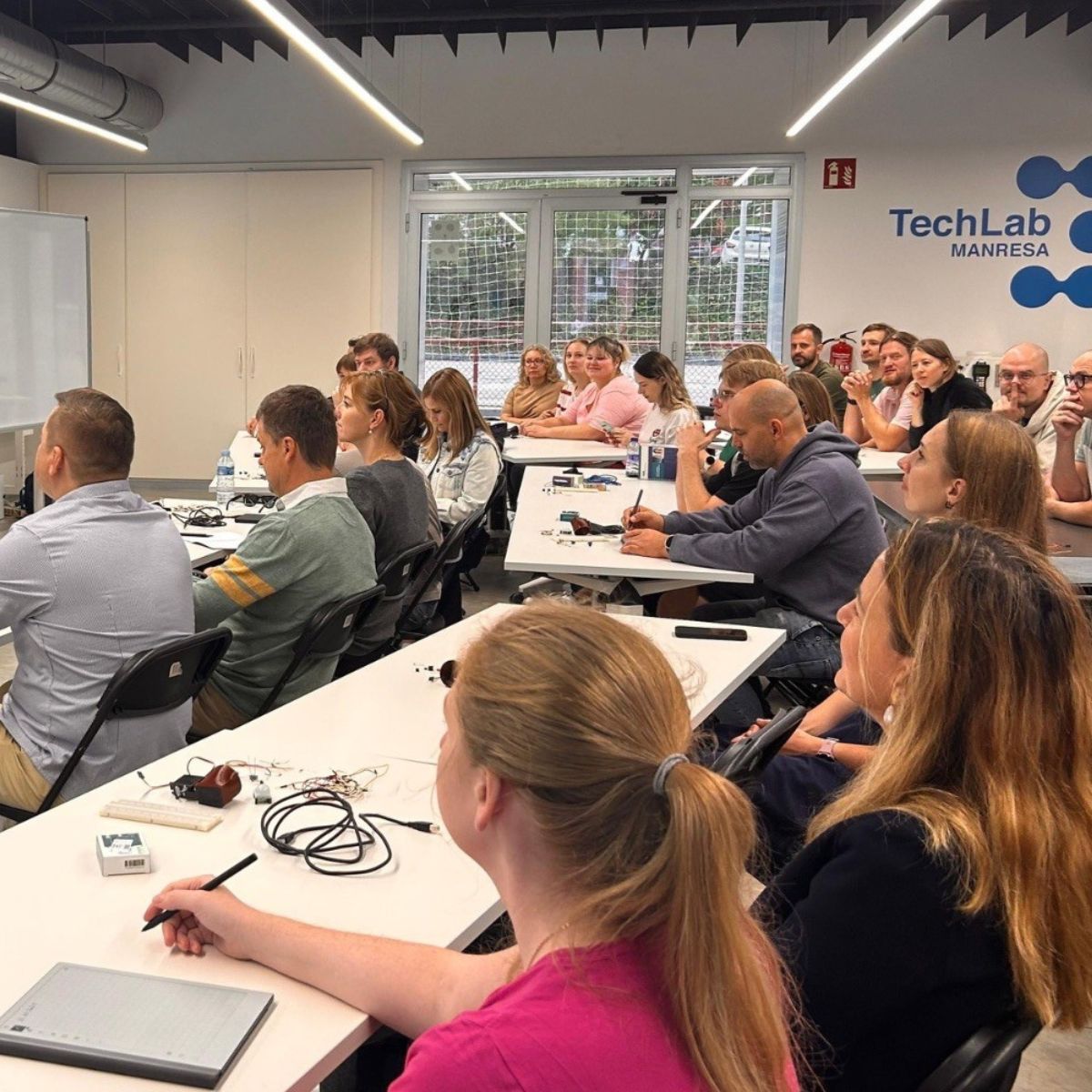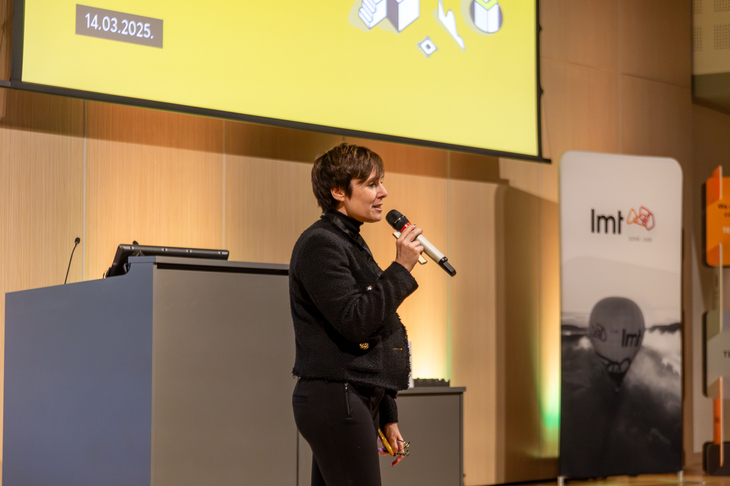
In March, I took part in the annual conference for technology teachers organized by Riga Business School as a department of Riga Technical University – “Idea Day: Artificial Intelligence in Education,” where educators, education managers, and educational technology experts gathered to raise awareness about artificial intelligence and its application in everyday life. Inspirational stories, workshops, and thought-provoking discussions on technology and learning strategies.
As an academic who is exposed to the synergy between AI and education daily, I have seen how AI has gone from a distant technical concept to an everyday reality in our classrooms. This rapid transition has left many educators at a crossroads between the promises of an educational revolution and severe warnings about the disappearance of the academic approach.
My aim in attending this conference was to provide a more nuanced insight into artificial intelligence in education under the title “The Messy Reality.” This reality points to the transformative potential and the legitimate challenges these technologies pose. The most surprising conclusion from my interactions with educators is that we successfully overcame the initial question of whether AI is necessary for education. That ship has sailed. Today’s more pressing question is how to integrate AI tools thoughtfully while preserving the core values defining a meaningful education. Productive conversations about AI in education require moving beyond simplistic perspectives. It marks a fundamental shift in how information is created, where it has been accessed, and how it has been evaluated – a shift that requires us to re-evaluate our approaches to teaching and assessment.
In my workshop on ethics, teachers played out scenarios that revealed how AI blurs traditional boundaries. When a student uses AI to help structure an essay while at the same time developing all the ideas independently, is this an example of collaboration or cheating? When adaptive curriculum consistently shifts certain groups of students towards less challenging content, how can we identify and address these algorithmic biases? There are no universal answers, but by using structured ethical frameworks, educators can develop context-specific solutions.
The most significant discussion about redesigning evaluation came in my masterclass. Traditional tasks – essays and practical assignments – were designed for an era when access to information was limited, and effort was required to create it. Artificial intelligence is fundamentally changing this equation, forcing us to re-imagine what meaningful assessment looks like.
The most promising approaches I have seen go beyond ‘catching cheaters’ and focus on what AI cannot easily replicate: authentic application, creative synthesis, metacognitive reflection, and the learning process. For example, a traditional research paper can be transformed into a multimodal project where students document their research journey, visualize their concepts, and share personal experiences and reflections on their learning. This approach maintains academic rigor while making assessment more meaningful and resistant to AI substitution.
The Critical Thinking Workshop revealed another vital dimension: our students need clear guidelines for evaluating the content produced by AI. Teachers developed learning activities to help students recognize factual errors, identify subtle biases, and compare the results of different AI tools and queries. These skills are not just academic exercises – they are essential for every citizen living in a world where AI increasingly influences the information space.
I have found that the most successful approaches to integrating AI share several standard features: they keep the focus on the learning objectives rather than on the technology itself; they emphasize transparency by openly communicating with students the rules and reasons for using AI; they maintain meaningful human interactions in the learning process; and they recognize that effective implementation requires continuous improvement. It is becoming increasingly clear that we are not just teaching with AI tools but preparing students for a future in which AI is an integral part of everyday life. Today’s students will graduate into a world where working with AI systems will be commonplace in many professions. Our job is not to shield them from these tools but to help them develop technical awareness, ethical awareness, critical evaluation skills, and creative thinking, as well as to help them acquire the skills to use these tools responsibly and effectively.
Integrating AI into education is not a journey to a destination with perfect solutions. It is a process of thoughtful experimentation, a reflective approach, and an ongoing conversation. In this era, we can rethink how we teach and what we teach by focusing more deliberately on those particular human capacities that will continue to be valuable in the age of AI.
The presence of AI in education, with all its disordered reality, is not something to be feared or blindly accepted. It is an opportunity to revisit fundamental questions: what is the purpose of education, which skills and knowledge are most important, and how can we best prepare students for a rapidly changing world? If we address these questions with critical thinking and creative imagination, we can shape the integration of AI in a way that strengthens rather than weakens the transformative potential of education.
Dr Vanessa Camilleri, Senior Lecturer, Department of Artificial Intelligence, University of Malta.